
Don't miss our HUGE CRYPTO DISCOUNTS - up to 15% OFF!
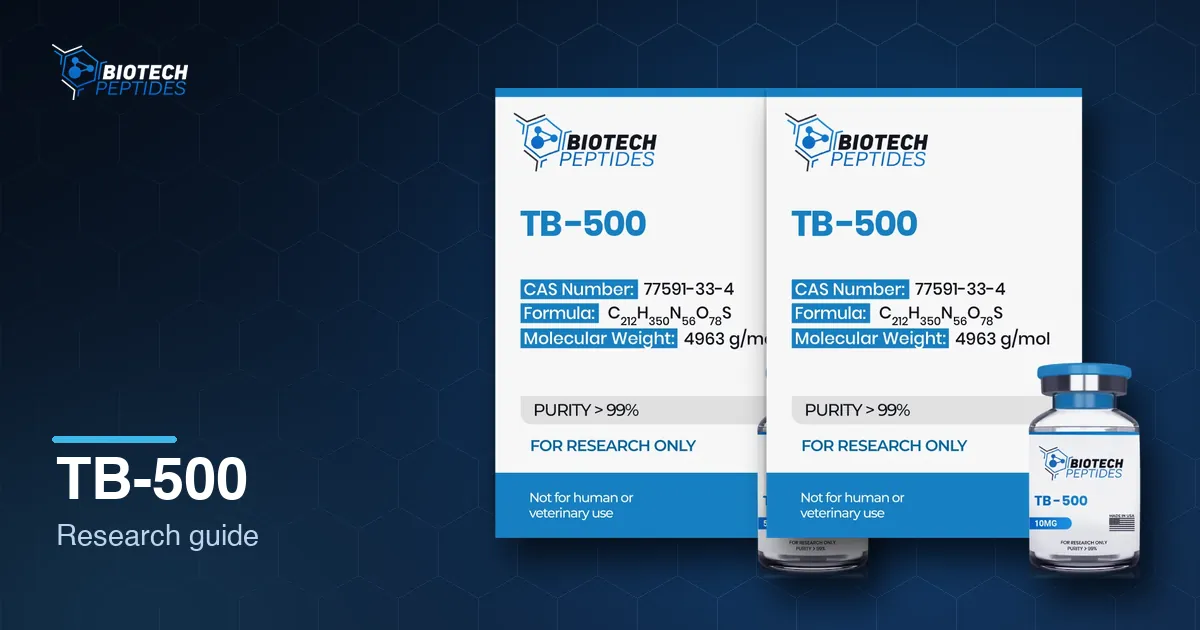
Biotech peptides TB-500: thymosin beta-4 in 5mg and 10mg
Biotech peptides TB-500 is thymosin beta-4, sold in 5mg and 10mg vials and in two blends. Here is what it does in the lab and how to choose a size.
What is biotech peptides TB-500?
Biotech peptides TB-500 is thymosin beta-4, a 43-amino-acid protein found in almost every cell type. Its main job is to bind actin, the protein that builds the cell’s internal scaffolding. By holding actin units until they’re needed, it lets cells change shape and move, which is exactly what has to happen when tissue repairs a wound.
Our TB-500 5mg and TB-500 10mg vials are synthesized and lyophilized in the USA, and both product pages carry the lot’s COA, HPLC and mass spec images.
Biotech peptides TB-500 prices
- TB-500 (Thymosin Beta-4) 5mg: $72, about $14.40 per mg
- TB-500 (Thymosin Beta-4) 10mg: $124, about $12.40 per mg
- BPC-157 TB-500 Blend 10mg: $115
- BPC-157 TB-500 GHK-Cu Blend 70mg: $305
What the TB-500 research shows
Malinda and colleagues reported in 1999 that thymosin beta-4 sped up wound closure in rats, with more new skin cells and blood vessels at the wound edge. In 2004 Bock-Marquette and colleagues published in Nature that it helped heart muscle cells survive and migrate after injury in mice.
Later work moved into eye, nerve and hair follicle models. Most of it is animal or cell research. The PubMed search for thymosin beta-4 lists the papers.
TB-500 next to BPC-157
TB-500 works through actin and cell movement, while BPC-157 is linked more to blood vessel growth and nitric oxide. That difference is why the pair shows up so often in repair studies, and why we sell the BPC-157 TB-500 blend. Our BPC-157 guide covers the other half.
TB-500 (thymosin beta-4) specifications
- CAS number: 77591-33-4
- Molecular formula: C212H350N56O78S
- Molecular weight: 4963 g/mol
- Length: 43 amino acids
- Form: freeze-dried powder, synthesized and lyophilized in the USA
How much TB-500 to order
Add up the total amount each group needs across every time point, then divide by the amount in one vial and round up. Add one spare vial for a repeat run or a lost dose. Buying everything at once keeps the whole study on one lot, which removes a variable you’d otherwise have to report. Keep unmixed vials frozen and reconstitute one at a time.
Designing a study around TB-500
TB-500 studies often use a wound or scratch model: cells or skin are wounded on purpose and the gap is measured over time. Heart studies use an induced infarct in mice. A sensible control set is vehicle alone, and if you’re testing the BPC-157 pairing, each peptide alone and both together, which needs the single vials as well as the blend.
Storing biotech peptides TB-500
Freeze the sealed vial at -20°C when it arrives. Reconstitute it with sterile bacteriostatic water, keep the solution at 2 to 8°C and use it within about four weeks. The product page for TB-500 (Thymosin Beta-4) 10mg lists the concentration you get with 1mL, 2mL or 3mL of water.
Where to buy biotech peptides TB-500
Biotech Peptides sells direct on biotechpeptidesshop.com, and that’s the only place to buy our products. Open TB-500 (Thymosin Beta-4) 10mg, choose the size if there’s more than one, add it to the cart and check out. You don’t need an account.
- Every product in the shop is in stock.
- Our peptides are synthesized and lyophilized in the USA.
- Shipping is free on every order, worldwide.
- Questions before you buy? Email sales@biotechpeptidesshop.com.
TB-500 and related products
 TB-500
 BPC-157 TB-500 Blend 10mg
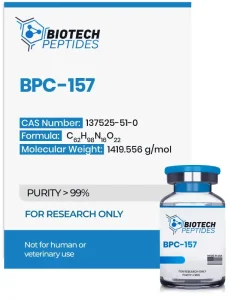 BPC-157 5mg / 10mg
TB-500 questions
What is TB-500?
The research name for thymosin beta-4, a 43-amino-acid protein that binds actin and helps cells move.
Which sizes are available?
TB-500 5mg for $72 and TB-500 10mg for $124, both freeze-dried.
Is there a TB-500 blend?
Yes. The BPC-157 TB-500 blend (10mg) and the BPC-157 TB-500 GHK-Cu blend (70mg).
Is TB-500 for human use?
No. It’s sold for laboratory research only.
Order TB-500 from Biotech Peptides
5mg and 10mg vials in stock, COA on the page, free shipping.
Biotech Peptides products are sold for laboratory research use only. They aren’t for human or veterinary use and haven’t been evaluated by the FDA.